Decorative Candle Ornament Design Review
As an embroidery designer who has spent years digitizing patterns for small businesses, I approach every new design file with a mix of creative appreciation and critical business scrutiny. When evaluating a digital asset like the Decorative Candle Ornament, my primary focus is not just on how it looks on a screen, but how it translates to thread, fabric, and ultimately, your brand’s bottom line. This review focuses on the practical application of this machine embroidery design for commercial use, specifically targeting small business owners, Etsy sellers, apparel decorators, and handmade brands looking to expand their merchandise offerings.
First Impressions: Visual Personality and Brand Fit
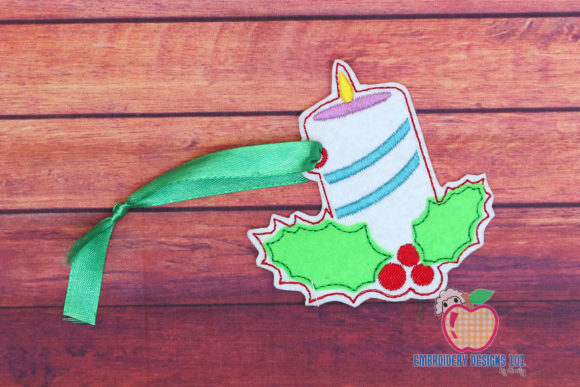
The title, Decorative Candle Ornament, immediately suggests a specific aesthetic. Based on the description indicating it is an "In The Hoop" (ITH) machine embroidery ornament designed for a 4x4 hoop size, we can infer a design that is likely self-contained, functional, and visually distinct. In the world of embroidery files, the term "ornament" often implies a shape that stands alone or serves as a focal point, rather than a subtle background texture.
For a small business, this design feels versatile yet thematic. It leans towards a friendly, perhaps rustic or elegant vibe, depending on the thread colors chosen. It does not scream corporate minimalism; instead, it offers a handmade product feel that resonates well with boutique shops, bakeries, florists, and local cafes. The inclusion of a step-by-step PDF tutorial is a significant value-add, suggesting the designer understands that clarity is crucial for production efficiency. However, potential buyers must verify if the "digiti" (digitized) elements include fine details that might struggle in mass production.
Real-World Business Applications
Where does the Decorative Candle Ornament shine in a commercial setting? Its compact nature, fitting within a standard 4x4 hoop, makes it ideal for high-volume, low-complexity items. Here are several scenarios where this design could drive revenue:
- Embellished Patches: Because it is described as an ornament, it can be easily converted into an iron-on or sew-on patch. These are perfect for brand identity reinforcement on denim jackets, backpacks, or client gift bags.
- Apron Embroidery: For bakeries, coffee shops, or craft studios, a chest-apron placement of this ornament adds a touch of warmth. It signals attention to detail and care, enhancing customer trust.
- Cap Embroidery: While caps often have curved surfaces, a 4x4 compatible design can work well on the front panel if scaled appropriately. It serves as a memorable logo accent for staff uniforms.
- Tote Bag Design: A simple, centered placement on a canvas tote bag elevates the item from a generic giveaway to a branded fashion accessory. This is particularly effective for Etsy branding and craft fair merch.
- Product Packaging Accents: Use this design to tag premium products. Imagine a candle box, a jar of homemade jam, or a floral arrangement wrapped with a ribbon featuring this embroidered tag.
The versatility of this digital embroidery file allows it to function as a standalone logo or a supporting graphic alongside larger text-based logos. For small business merch, consistency is key, and this design provides a recognizable visual anchor.
Strategic Placement and Scale Considerations
While the design is promising, not every application is suitable. As a professional reviewer, I advise caution in the following areas:
- Small Patch Sizes: If you plan to produce patches smaller than two inches, test the design rigorously. Intricate outlines may merge together, losing definition.
- Curved Surfaces: When applying to cap embroidery or rounded bottle labels, ensure the digitizer accounted for curve distortion. Flat designs often pucker when stitched on curves without proper underlay adjustments.
- High Stitch Density: Check the stitch density in the source file. High density can make fabric stiff and uncomfortable, especially on lightweight t-shirts or delicate aprons. Low-density designs are generally preferred for wearable items.
- Dark Uniforms: Ensure there is sufficient contrast between the thread colors and your base fabric. A light-colored candle design on a black uniform may require excessive backing, leading to bulkiness.
Impact on Brand Identity and Customer Perception
Embroidery carries a weight that printing cannot match. It signifies durability and quality. By incorporating the Decorative Candle Ornament into your product line, you are communicating professionalism and a commitment to tangible quality. Customers associate embroidered goods with higher value, which can justify premium pricing for your custom apparel or gifts.
Furthermore, this design supports a narrative of craftsmanship. In an era of mass-produced goods, the slight imperfections inherent in handmade or small-batch embroidery add character. This enhances buyer engagement and fosters a connection between the creator and the consumer. Whether used on a holiday collection or year-round staples, the ornament acts as a visual cue for warmth and hospitality—traits highly desirable for service-oriented businesses.
Practical Designer Notes for Production
Before committing to a full production run, follow these essential steps to ensure the Decorative Candle Ornament performs as expected:
- Test in Black and White: Convert the design to monochrome to check its silhouette. If the shape is unclear without color, it will struggle in real-world applications.
- Verify Hoop Size Compatibility: Confirm that the 4x4 hoop size matches your available equipment. If your machines only support larger hoops, scaling down may compromise detail.
- Inspect Thread Color Contrast: Choose threads that pop against your target fabric. Neutral tones work for elegance, while bright colors enhance playfulness.
- Check Spacing and Stability: Ensure adequate spacing between stitches to prevent tearing. Use the recommended stabilizer type specified in the PDF guide to maintain fabric integrity.
- Create a Printable Mockup: Before cutting fabric, generate a printable mockup to visualize scale and placement on various products. This helps in client approvals and marketing materials.
- Confirm Commercial Licensing: Always verify that you have the right to sell finished goods made from this design asset. Some digital files restrict commercial use, which could lead to legal issues.
Final Verdict
The Decorative Candle Ornament is a solid addition to any embroidery designer’s toolkit for small business clients. Its adaptability across various product types—from tote bag design elements to staff uniforms—makes it a cost-effective investment. However, success depends on careful execution. By testing on real fabric, choosing appropriate stabilizers, and respecting the limits of small-scale embroidery, you can transform this digital file into a profitable physical product.
For businesses seeking to enhance their brand identity with a touch of classic charm, this design delivers. Just remember to evaluate each project individually, considering factors like fabric texture, intended use, and washing requirements. With the right approach, the Decorative Candle Ornament can become a signature element of your commercial embroidery portfolio, driving both sales and customer loyalty.